1. The Ethyl Silicate Curing Mechanism: Why Zinc Primers Need Moisture
Inorganic Zinc Silicate (IOZ) primers, formulated with ethyl silicate binder and high-purity metallic zinc dust, provide unmatched galvanic protection for structural steel exposed to severe marine and industrial environments (ISO 12944 C5 and CX classifications). Unlike conventional epoxy primers that cure via chemical cross-linking between base and hardener, inorganic zinc primers cure via a moisture-hydrolysis reaction with atmospheric water vapor.
Upon spray application, volatile alcohol solvents flash off quickly within 15–30 minutes, giving the visual illusion that the primer is dry. However, the ethyl silicate binder remains un-crosslinked. To achieve full hardness, durability, and topcoatability, the coating must absorb ambient moisture (H₂O) from the surrounding air to convert into an insoluble zinc polysilicate matrix.
2. The Low-Humidity Bottleneck in the Field
In arid climates, winter fabrication facilities, or climate-controlled painting shops, ambient relative humidity frequently drops below 50% (and often below 35%). Under these dry conditions, the hydrolysis reaction grinds to an absolute halt.
If an intermediate epoxy coat is applied over an uncured inorganic zinc primer, disaster is inevitable:
- Solvent Entrapment: The strong aromatic solvents in the epoxy topcoat soften the uncured silicate matrix.
- Mud-cracking & Flaking: The uncured zinc layer fractures under shrinkage stress, losing cohesion.
- Intercoat Delamination: The entire multi-coat system shears off down to the powdery zinc layer within months of field service.
3. Safe Water Misting: How to Expedite Curing Correctly
When project schedules cannot wait days for atmospheric humidity to cure the primer, applicators can safely accelerate curing using controlled water application. However, execution must be precise:
- Initial Flash-off Window: Never apply water immediately after spraying. Allow all carrier solvents to flash off completely (typically 1.5 to 3 hours depending on air temperature and ventilation). The film must be dry to touch and firm to finger pressure.
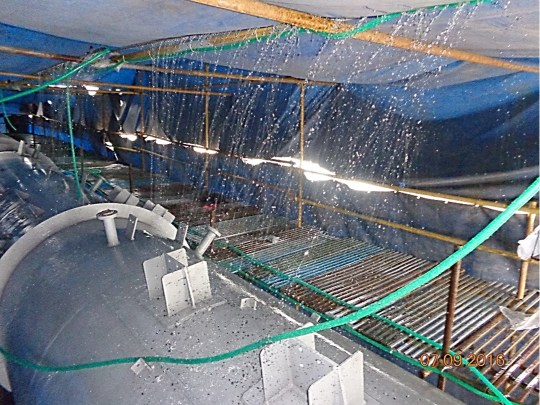
- Fine Atomized Water Mist: Using a paint spray gun or agricultural misting nozzle, spray a fine, uniform cloud of clean potable water (chloride content < 50 ppm) over the coated surface.
- Avoid Direct Jetting & Puddling: Heavy hose streams or standing puddles will dissolve unreacted silicate binder, wash away zinc particles, and create white streaks or soft spots.
- Keep the Surface Damp: Maintain the steel in a damp, moistened state for 4 to 8 hours. In warm conditions, repeat light misting every 60 to 90 minutes.
"Never use recycled or high-salinity water for mist curing. Chlorides deposited on the fresh zinc primer will accelerate premature white rust formation and ruin intercoat adhesion."
4. Validation of Cure: ASTM D 4752 Solvent Rub Test (MEK Test)
Visual inspection and thumbnail scratches cannot prove whether an inorganic zinc primer is chemically cured. The industry benchmark test specified across worldwide standards is ASTM D4752: Standard Practice for Measuring MEK Resistance of Ethyl Silicate (Inorganic) Zinc-Rich Primers by Solvent Rub.
| ASTM D4752 Rating | Resistance Characteristics | Acceptance for Topcoating |
|---|---|---|
| Rating 5 | No paint removal after 50 double rubs; burnished or polished appearance; coin scratch reveals glassy, sound film. | Fully Cured. Approved for intermediate epoxy application. |
| Rating 4 | Slight film softening or trace color transfer on cotton cloth; resistance remains firm. | Acceptable. Meets standard commercial specifications for topcoating. |
| Rating 3 | Noticeable film removal; noticeable zinc deposit on cloth; substrate not exposed. | Marginal. Requires additional mist curing and re-testing. |
| Rating 2 to 0 | Significant dissolution; cloth readily cuts through to bare steel in fewer than 20 rubs. | Uncured. Topcoating strictly prohibited; system will fail catastrophically. |
5. Pre-Topcoating Preparation: Dealing with White Rust
When accelerating cure with water, zinc dust on the surface reacts with moisture and atmospheric carbon dioxide, creating a superficial layer of zinc salts (zinc hydroxycarbonate), colloquially called 'white rust'. Before applying the intermediate epoxy coat, this non-adherent powdery deposit must be removed by stiff nylon bristle brushing or low-pressure freshwater washing (ISO 8501-4 compliant) and allowed to dry completely. Applying epoxy directly over white rust guarantees poor adhesion and blister formation.